


The Alywn Lishman Award
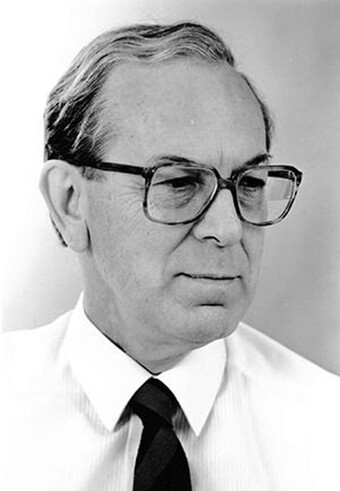
William Alwyn Lishman
1931 – 2021
The William Alwyn Lishman Award is presented to an individual who has made a notable contribution to clinical neuropsychiatry at an international level.
From an early age Alwyn Lishman was intent on being a musician but set this aside and enrolled as a medical student at Birmingham University. He soon found that he had made the right choice. Early on he took an intercalated degree in Anatomy and Physiology in Professor Solly Zuckerman’s department which set the stage for an enduring interest in the brain in relation to cognition and behaviour.
Upon qualifying he spent two years in obligatory national service at the army hospital for head injury at Wheatley near Oxford. There he came under the influence of the neurologist Professor Ritchie Russell and, on obtaining his Membership of The Royal College of Physicians, he was promoted to Junior Specialist in Neurology. On demobilisation he obtained further neurology experience at The Radcliffe Infirmary in Oxford, also with Professor Russell.
With the encouragement of Professor Aubrey Lewis, he decided to study psychiatry at The Maudsley Hospital in London. The decision to write his medical doctorate on records held in the attic of the Churchill Hospital, concerning soldiers who had sustained penetrating head injuries during the 2nd World War, brought him back into contact with neurology and with Oxford.
After completing psychiatric training he was appointed Consultant in Psychological Medicine at the National Hospital, Queen Square, and later at The Hammersmith Hospital’s Royal Postgraduate Medical School. He then returned to The Maudsley and joined the consultant staff, ultimately becoming Professor of Neuropsychiatry at the Institute of Psychiatry. His clinical experience in these various settings led to the writing of his major textbook, “Organic Psychiatry: The Psychological Consequences of Cerebral Disorder,” initially published in 1978. This was the first comprehensive account of how medical conditions can affect brain function and thereby come to the attention of psychiatrists. It quickly became indispensable to students of psychiatry and neurology alike and firmly established neuropsychiatry as a modern discipline. Two further single author editions followed. The most recent was published in 2012 by Anthony David, Simon Fleminger, Michael Kopelman, Simon Lovestone, and John DC Mellers.
Lishman initiated extensive studies of memory including interactions among memory, emotion and personality variables; and investigations into possible anomalous cerebral organisation in psychotic Illness. The advent of brain imaging, along with refinements in clinical psychology, brought major new opportunities for research in neuropsychiatry. Efforts were made towards automated of scan analysis and detailed study of brain dysfunction in alcoholism and schizophrenia.
During his time at The Maudsley and Institute of Psychiatry, Professor Lishman became an international influence in the field of neuropsychiatry. Locally, he supervised numerous research students and trained many of our present-day leading neuropsychiatrists. He traveled widely, teaching in many countries, and developing valuable relationships with colleagues.
Professor Lishman served on the majority of UK scientific committees and grant giving bodies. During his time on the Neurobiology and Mental Health Board of the Medical Research Council in the 1970s, he argued strongly and successfully for a resurgence of interest into research in the dementias.
In the 1980’s Jonathan Bird drew attention to the need for a neuropsychiatry association to stimulate interactions among neurologists, psychiatrists, psychologists and laboratory neuroscientists. The British Neuropsychiatric Association was thus established in 1987 with Professor Lishman as founding chairman. Soon, other neuropsychiatry associations were established, including the International Neuropsychiatric Association.
PREVIOUS AWARD WINNERS AND THEIR LECTURE TOPICS
4th INA Congress Buenos Aires, September 2002
Dr. Gustavo Roman, USA
“Vascular Dementia: An Overview”
5th INA Congress Athens, October 2004
Dr. M. Trimble, UK
“The Evolution of the Limbic System and Epilepsy as a Clinical Model of Dissolution”
6th INA Congress Sydney, September 2006
Dr. C. Edward Coffey, USA
“Dramatically Improving the Quality of Care in Neuropsychiatry”
7th INA Congress Cancun, December 2008
Prof. Marsel Mesulam, USA
“Primary Progressive Aphasia”
8th INA Congress Chennai, September 2011
Prof. Mary M Robertson, UK
“Tourette Syndrome: The Current Status”
9th INA Congress Chicago, September 2013
Dr. Mark George, USA
“The Incredible Renaissance of Brain Stimulation Methods Current Status and Future Implications”
10th INA Congress Jerusalem, October 2015
Prof. Stuart C. Yudofsky, USA
“The assessment and psychopharmacological treatment of agitation and aggression in patients with neuropsychiatric disorders”
11th INA congress, Bangalore, February 2018
Prof. Julie Snowden, UK
“Neurodegeneration: a natural model for understanding cognition and behaviour”
12th INA joint conference with Royal College of Psychiatrists, September 2022.
Prof. Ludvic Zrinzo, UK
“Severe refractory obsessive compulsive disorder and depression: should we consider stereotactic neurosurgery”
13th INA Congress Melbourne, October 2024
Prof. Perminder Sachdev, Australia
“The neuropsychiatric challenge of covert cerebrovascular disease”
