


The Solomon Carter Fuller Award
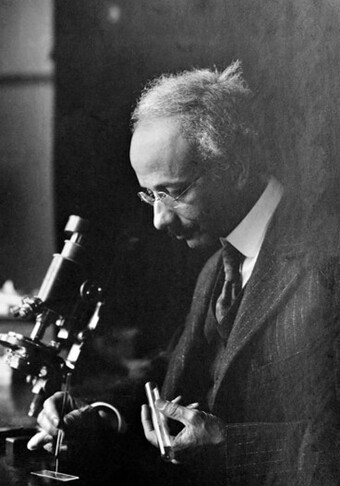
Solomon Carter Fuller
1872 – 1953
Solomon Carter Fuller, MD, America’s first African American neuropsychiatrist, was born in Monrovia, Liberia in 1872, the grandson of American slaves, his paternal grandfather having emigrated to Liberia after buying his and his wife’s freedom from slavery. Fuller emigrated to the US in 1889, went to college and medical school, eventually graduating from Boston University Medical School in 1897, working as an elevator operator to earn his tuition. Only about half of US medical school graduates took positions as “internes” in the 1890’s and those positions were typically closed to Jews, blacks and women. On the recommendation of a neurology professor at BU, however, Fuller was given a position as an “interne” in pathology at the Westborough, Massachusetts Insane Hospital where he would eventually establish a neuropathology laboratory and become editor of the Westborough State Hospital Papers (research reports).
A medical student at the time, Fuller was influenced by American Civil War surgeon, S. Weir Mitchell’s, 1894 lecture to the American Medico-Psychological Association (the predecessor of the American Psychiatric Association) in which he took the field of psychiatry to task for failing to investigate mental illness using the tools of medical science. In the aftermath of Mitchell’s lecture, American state hospitals began opening pathology laboratories. The Westborough Insane Hospital had one such laboratory, which, under Fuller’s directorship was considered the best place in the US to study the histopathology of the cerebral cortex and the latest pathological findings in severe mental illness. While at Westborough, Fuller took a leave of absence to go to Munich from November 1904 to August 1905 to study neuropsychiatry under Emil Kraepelin at the Royal Psychiatric Hospital and joined Alois Alzheimer’s neuropathology group in Kraepelin’s department. As one of Alzheimer’s foreign research assistants, he studied and drew extracellular plaques and intracellular neurofibrils in neurodegenerative diseases. A drawing of neurofibrils from one of Fuller’s 1907 papers is reproduced below:
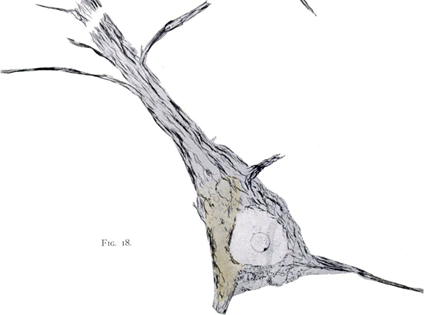
Illustration from Fuller SC, A Study of the Neurofibrils in Dementia Paralytica, Dementia Senilis, Chronic Alcoholism, Cerebral Lues and Microcephalic Idiocy. Amer J. Insanity. 1907, 63(4):415-481.
Fuller’s papers did not mention Alzheimer’s work with “Frau D” that was presented at the 1906 meeting of the Southwestern Psychiatric Society in Tübingen Germany, nor did he appear to use the term “neurofibrillary tangles” in his 1907 papers. A neurologist-psychiatrist-neuroscientist, Fuller became one of America’s foremost experts on Alzheimer disease, was the first to translate Alzheimer’s work into English, and supported Alzheimer’s position that the dementia was not due to arteriosclerosis as had been previously believed. In 1912 Fuller published the first comprehensive review of Alzheimer’s disease. He also was an early proponent of the idea that dementia paralytica, known at the time as general paresis of the insane (now known as tertiary syphilis) was an organic disease and not an idiopathic psychiatric disorder as had been believed previously.
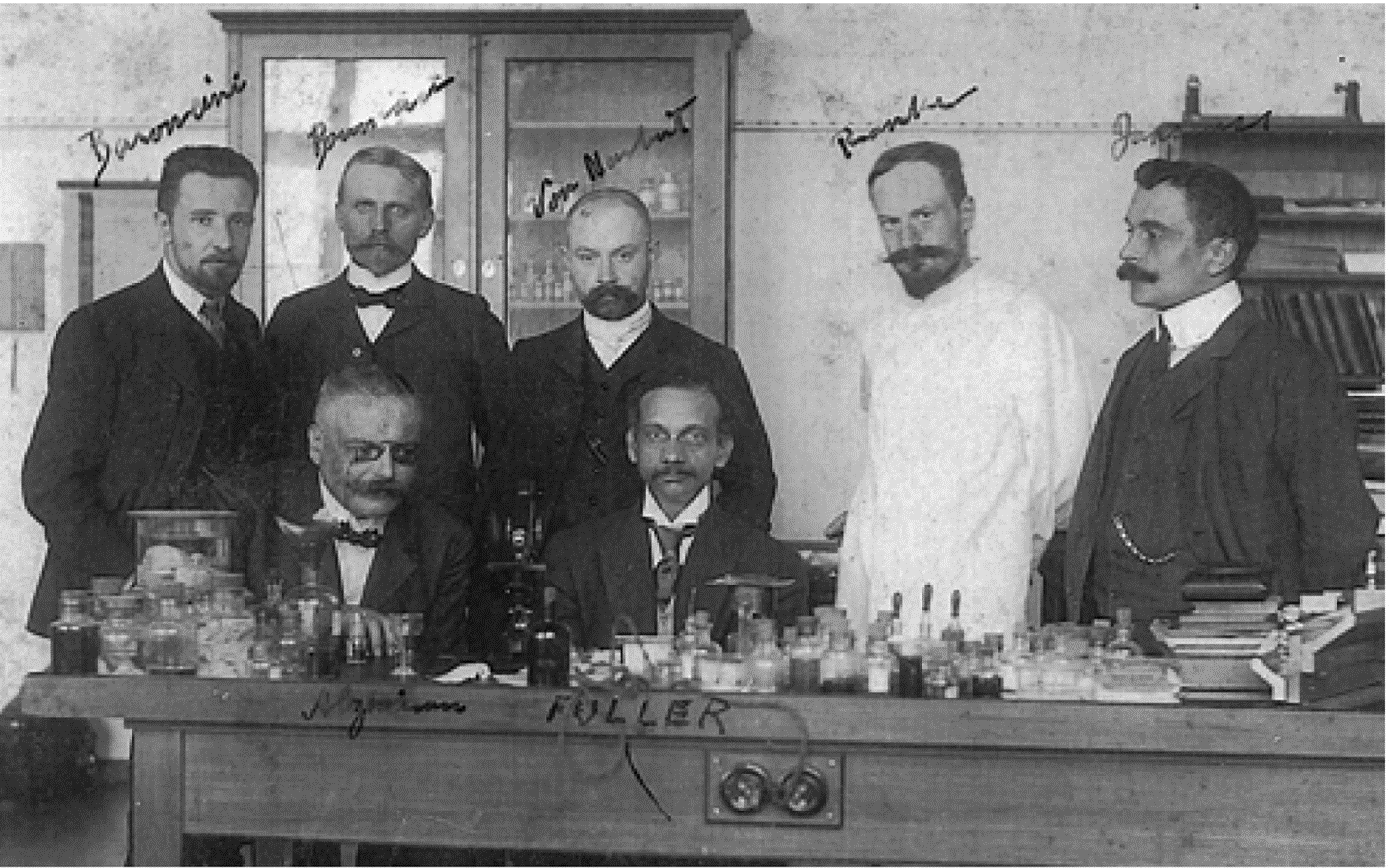
The research group of Alois Alzheimer at the Neuropathology Institute, University of Munich, 1904. Solomon Carter Fuller is seated next to Alzheimer. Photo from Kaplan M, Henderson AR, Solomon Carter Fuller, M.D. (1872-1953): American Pioneer in Alzheimer’s Disease Research, J Hist Neurosci, 9(3) 250-261, 2000.
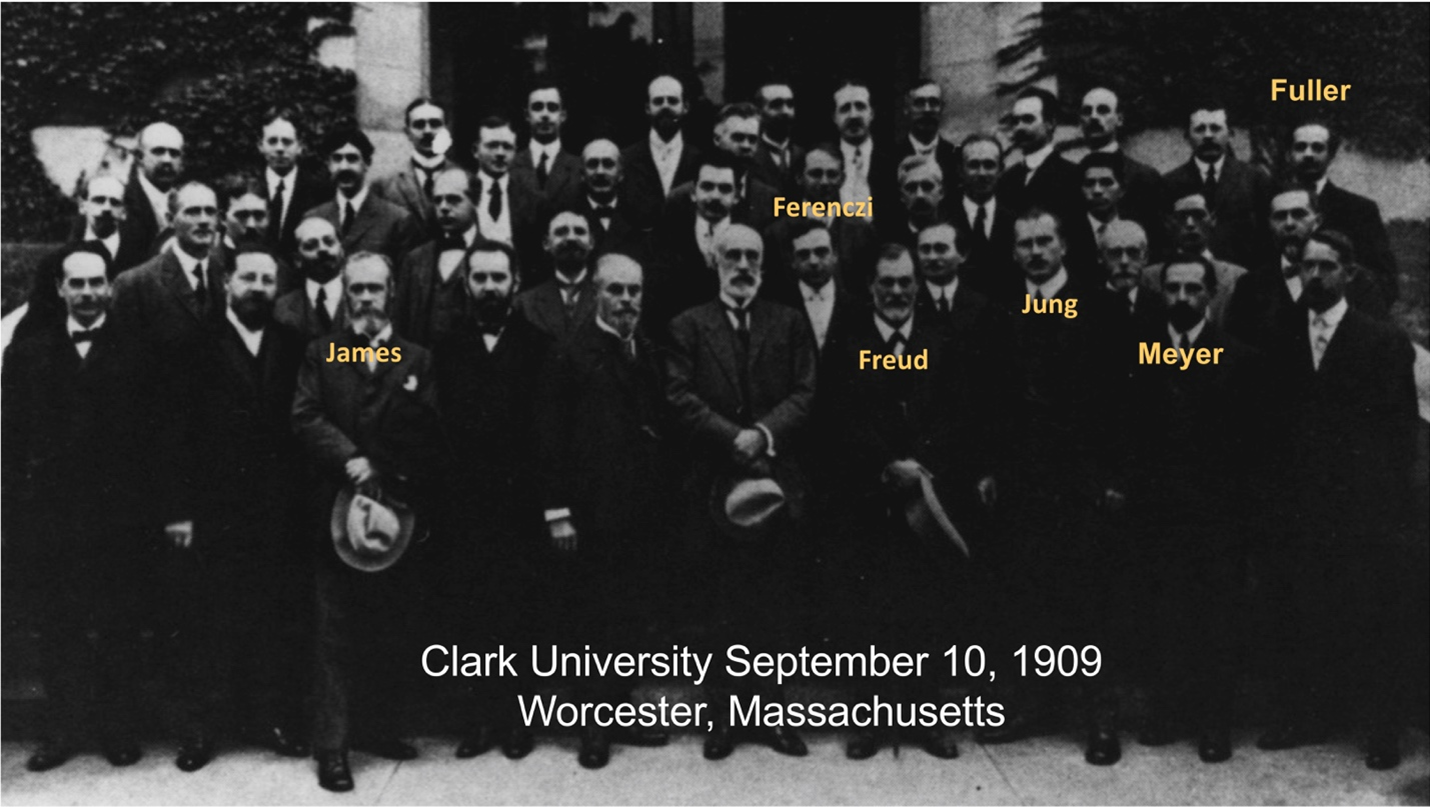
In 1909, on the occasion of the 20th anniversary of Clark University in Worcester, Massachusetts, Fuller was one of five featured lecturers in a group that also included Sigmund Freud, Carl Jung, William James and Adolf Meyer. Fuller’s topic was “Cerebral Histology with Special Reference to Histopathology of the Psychoses.”
In 1918, Fuller volunteered his services as a neuropsychiatrist to the US war department. The response was frank but unsettling. They would be thrilled to have his expertise, but they could only commission him a lieutenant and not a captain as was the case for white physicians. Fuller rescinded the offer feeling that he would not have the authority needed to carry out the research he felt would be needed.
Fuller joined the faculty of Boston University Medical School in the pathology and neurology departments in 1899 while continuing to consult and conduct research at the Westborough Insane Hospital. He eventually became head of BU Neurology but was never given the title of chair or promoted from associate to full professor. The only African American faculty member, he was paid less than his white colleagues doing similar work. The last straw came after several years as head of neurology when BU hired a junior neurologist as chair and promoted that neurologist to full professor in 1933. Despite over 30 years of research and educational leadership in psychiatry, neurology and neuroscience, Fuller was passed over for promotion at Boston University. Fuller maintained a private psychiatric practice until his death in 1953.
The Solomon Carter Fuller Award recognizes a neuropsychiatry trainee for excellence in research and/or clinical neuroscience, based on an abstract submitted for the INA meeting and an application.
HOW TO APPLY: Applicants for the award should be from a country other than South Africa, should attach a copy of the scientific abstract submitted to the INA conference, a personal statement of no more than 500 words describing their career trajectory toward neuropsychiatry and a detailed letter of recommendation for the award from a faculty member familiar with their work. Nomination materials should be sent to internationalneuropsychiatry@gmail.com. All entries must be received by 15 April, 2026. Notification of outcome will be received by 30 July.
